
The 14,200 Rupee Hurdle: 4 Surprising Takeaways from the Latest Nepal UAE Labor Talks
7/2/2026
1. Introduction: The High Price of a New Beginning
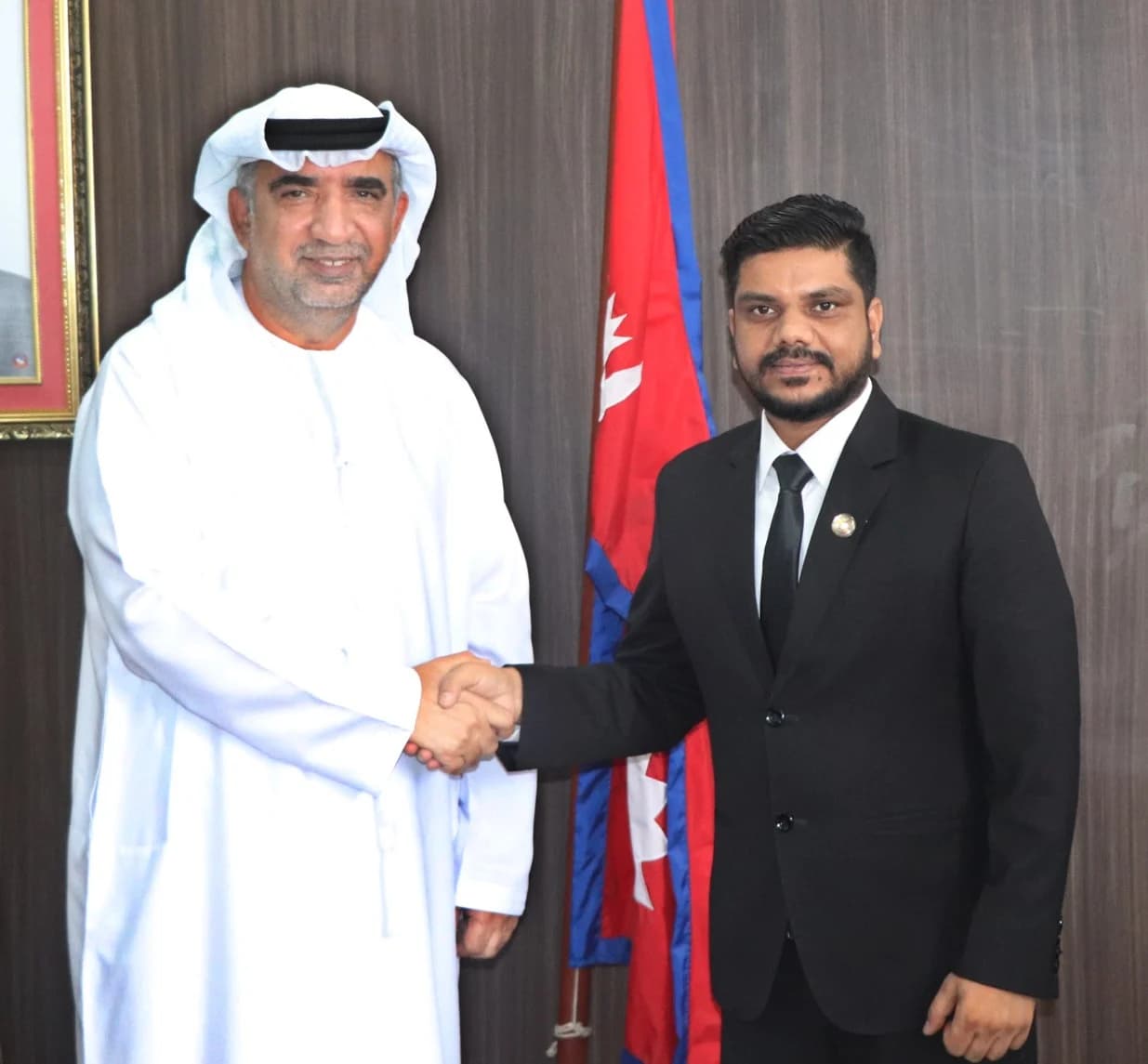
For the thousands of Nepali citizens seeking to navigate the competitive corridors of the Middle Eastern labor market, a job offer from the United Arab Emirates (UAE) is often viewed as a definitive gateway to upward mobility. Yet, the journey from recruitment to deployment is increasingly fraught with administrative friction and asymmetric migration costs. On Wednesday, Ashad 17, a high-level bilateral meeting was convened between Nepal’s Minister for Youth, Labor, and Employment, Ramji Yadav, and the UAE Ambassador to Nepal, Abdulla Saeed Mubarak Jarwan Al Shamsi. While ostensibly a routine diplomatic engagement, the talks peeled back the layers of a deepening "consular bottleneck" that threatens the economic viability of migration for the very workers the UAE depends upon to sustain its infrastructure.
2. The 14,200 Rupee "Redundancy" Tax
The primary point of contention in the Ashad 17 talks was the "dual arrangement" currently governing police character certificates. Under this regime, Nepali workers are subjected to a redundant verification process: an official report issued by the Nepal Police must be re-verified through VFS Global for UAE visa processing. This secondary layer of bureaucracy carries a punitive price tag of 14,200 NPR.
Within the migration industry, labor entrepreneurs have labeled this fee "illogical," arguing that there is no strategic justification for re-validating a document already authenticated by the primary state law enforcement agency. For a worker whose initial monthly salary may barely exceed this amount, the fee represents a significant financial deficit incurred before the first day of employment. During the meeting, Minister Yadav explicitly challenged the utility of this requirement.
"The Minister urged for the removal of this troublesome arrangement regarding police character certificates to create a more accessible environment for workers."
Ambassador Al Shamsi provided a measured diplomatic answer, stating that the UAE government would "seriously consider" the request a phrasing that signals recognition of the burden while stopping short of an immediate policy reversal.
3. Consular Clemency: The Geopolitics of Amnesty
In a development that suggests the bilateral relationship is moving toward a more complex humanitarian partnership, Ambassador Al Shamsi announced that the UAE government granted amnesty to 111 Nepali prisoners on the occasion of Eid ul-Adha.
From a diplomatic perspective, this act of clemency should be viewed as a soft-power maneuver. By granting these pardons, the UAE is effectively engaging in a strategic de-escalation of bilateral tensions, signaling a commitment to humanitarian cooperation that transcends the transactional nature of labor exchange. For the families of these 111 individuals, it is a life-altering gift; for the two nations, it is a gesture of goodwill intended to smooth over the more transactional frictions regarding labor costs and security protocols.
4. The "Gen Z" Security Paradox
The recent imposition of strict certificate verification rules is a direct reaction to domestic security concerns within the UAE. The "Gen Z protests," which reached a peak on Bhadra 23 and 24, prompted a significant tightening of vetting procedures. Following these events, the UAE implemented the new verification requirements in the first week of Mangsir.
However, a significant "notification gap" remains. Despite enforcing these rules for months, the UAE government has yet to provide a formal, high-level notification to the Nepali government regarding the change in protocol. This lack of transparency has created a diplomatic paradox: while the UAE exercises its sovereign right to ensure domestic stability following civil unrest, it has done so by bypassing standard bilateral labor protocols. This leaves the Nepali state in a reactive position, forced to mitigate an economic burden on its citizens that was implemented without prior consultation.
5. Beyond Paperwork: A Blueprint for Safer Migration
The discussions between Minister Yadav and Ambassador Al Shamsi also sought to revitalize the core tenets of the 2019 Nepal-UAE Labor Agreement. The focus shifted from immediate administrative hurdles toward a long-term strategy of "skill-sharing" and ethical recruitment.
The move toward skill-sharing is a critical evolution in the migration landscape. By transitioning from the export of "unskilled labor" to a model centered on specialized training and efficiency, the goal is to mitigate the inherent vulnerability of the workforce. Under the framework of the 2019 agreement, increasing the market value of Nepali migrants is seen as the primary defense against low wages and debt-bondage, transforming the migrant from a fungible commodity into a partner in dignified employment.
6. Conclusion: A Question for the Future
The UAE remains one of the most vital destinations for the Nepali diaspora, yet the current administrative hurdles characterized by redundant fees and inconsistent notification threaten the sustainability of this labor corridor. While the recent prisoner amnesties demonstrate a high degree of diplomatic goodwill, they do not resolve the structural financial barriers facing new arrivals. Can the current diplomatic momentum, bolstered by humanitarian gestures, eventually lead to the total elimination of the 14,200 NPR "redundancy tax," or will the cost of security continue to be a burden shifted onto the shoulders of the migrant worker?